Mon - Fri: 9:00 am to 4:00 pm
manager.hqdentaldesign@gmail.com
© Temple Tx Dental 2023, All Rights Reserved.
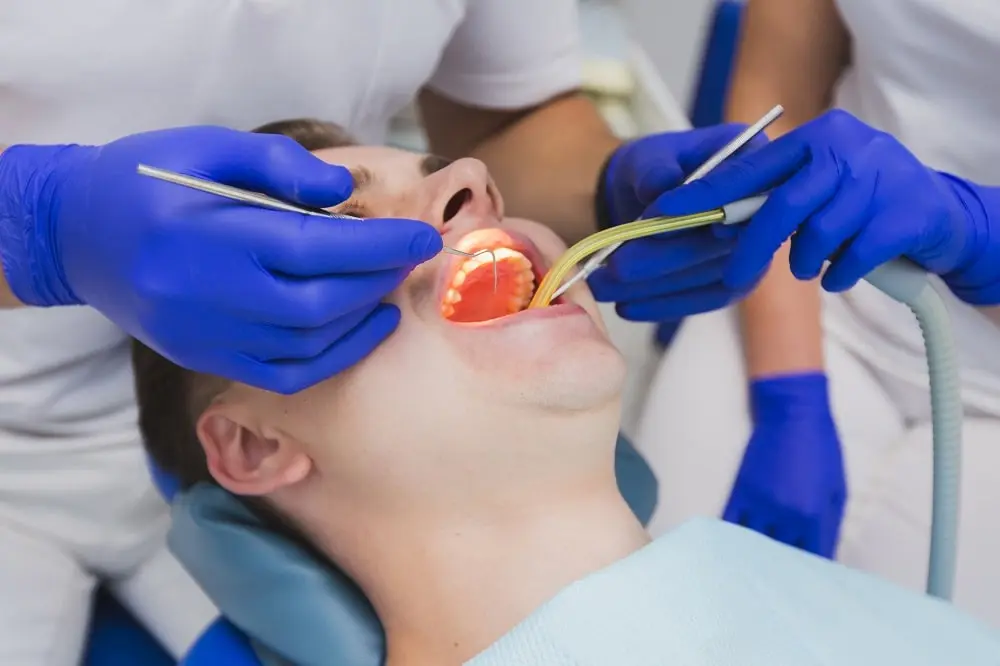
If you or a loved one are noticing a persistent ache at the back of the jaw, localized swelling, or stiffness when opening your mouth, you may be facing a common but critical dental milestone: wisdom tooth impaction. For residents in Temple, Belton, Little River Academy, and Troy—specifically those within the 76502, 76504, 76513, and 76554 zip codes—these symptoms require immediate attention.
At HQ Temple Dentist, Dr. Hiep Pham and our specialized surgical team provide a medical-grade experience tailored for veterans, retirees, and neighbors with disabilities. We combine advanced surgical techniques with a spa-like environment to ensure your comfort is the top priority.
HQ Dental team have done fantastic high quality routine and cosmetic work on my teeth as well as my families. There is no better dentist in Georgetown.
HQ Dental is among the best dental clinics I have visited. I think their secret is the true care of patients.
Everyone who worked in my mouth was extremely gentle, yet thorough. They’ve certainly found a patient for life

When it comes to third molars (wisdom teeth), procrastination is your enemy. By the time you feel physical pain, the tooth has likely already begun causing damage that can be expensive and difficult to repair.
An impacted wisdom tooth creates a tiny pocket between the gum and the tooth that is impossible to clean with a toothbrush. This area becomes a breeding ground for bacteria, leading to pericoronitis. For senior patients or those with compromised immune systems, an untreated oral infection can spread to the bloodstream and may become life-threatening.
Wisdom teeth often grow at an angle, pushing directly into your healthy second molars. This crowding can cause resorption, where the wisdom tooth damages the root of a healthy tooth—turning one problem into two.
Wisdom teeth develop in a sac within the jawbone. If they remain trapped, that sac can fill with fluid and form a cyst. These cysts can hollow out the jawbone and damage nearby nerves, leading to long-term complications.
Do not wait for the pain to become unbearable. Call HQ Temple Dentist at (254) 773-1672 today to schedule your consultation.
While we treat patients of all ages, there is a clear "Golden Window" for wisdom tooth removal: between the ages of 16 and 25.
Dr. Pham utilizes high-resolution imaging to determine exactly how your teeth are positioned. The "impaction type" determines the complexity of your surgery:
The tooth has cleared the bone but remains under the gum. These are the most prone to painful infections.
The tooth has partially emerged, but a portion of the crown is still trapped in the jawbone.
This is the most difficult type. The tooth is entirely encased in the jawbone, requiring a higher level of surgical skill to remove without damaging neighboring structures.
You might wonder why a wisdom tooth extraction is more complex than a standard tooth removal. It comes down to location and bone density.
Wisdom teeth are buried deep in the posterior jaw, where the bone is at its thickest and densest. Furthermore, their proximity to the Inferior Alveolar (IA) Nerve in the lower jaw and the Maxillary Sinuses in the upper jaw makes this a specialized surgical task. This is why a bone density consultation is a mandatory first step; understanding the rigidity of your jaw helps Dr. Pham plan the most gentle and effective approach.
At HQ Temple Dentist, we take extra steps to protect your anatomy that many general offices skip.
The IA Nerve provides sensation to your lower lip and chin. If a wisdom tooth root is wrapped around this nerve, there is a risk of permanent numbness.
Upper wisdom teeth often sit directly against the floor of your maxillary sinuses.
We are proud to offer PRF (Platelet Rich Fibrin) technology—and our staff has received rigorous training in PRF fabrication.
We use a small sample of your own blood to create a concentrated "healing plug" filled with your natural growth factors. This plug is placed directly into the socket to:
Your recovery begins the moment the procedure ends. Dr. Pham ensures every patient is set up for success with a tailored protocol:
Dr. Pham always prescribes a three-part protocol to ensure a smooth recovery:
We believe surgery shouldn't feel clinical. After your procedure, we provide a warm, lavender-infused towel to help you relax. This small touch is designed to soothe your senses and help you transition from the dental chair back to your day feeling calm and supported.
With our advanced local anesthetics and sedation options, you should feel zero pain during the procedure. Most patients only report a feeling of “pressure.”
Most patients return to their normal routine within 2 to 4 days. Upper teeth usually heal faster than lower teeth.
High bone density can make extractions more technical. Knowing your density beforehand allows Dr. Pham to choose the most gentle surgical tools for your specific jaw.
A graft is used to preserve bone structure, protect the IA nerve, and securely seal any potential sinus exposure.
It occurs when the protective blood clot is lost too early. Our PRF technology is specifically designed to prevent this from happening.
Yes. We welcome patients with disabilities and our staff is dedicated to ensuring your visit is comfortable and fully accessible.
While rare, the proximity of roots to the IA nerve is a risk. This is why we use bone grafts as a protective buffer to minimize this possibility.
NO. The suction from a straw can dislodge the healing clot and cause a painful dry socket.
If you feel air moving between your mouth and nose when you breathe, notify us. However, our use of bone grafts prevents this in almost every case.
Yes. We offer Cherry financing and a 10% Senior Discount for those 60 and older to ensure care fits your monthly budget.
Automated page speed optimizations for fast site performance